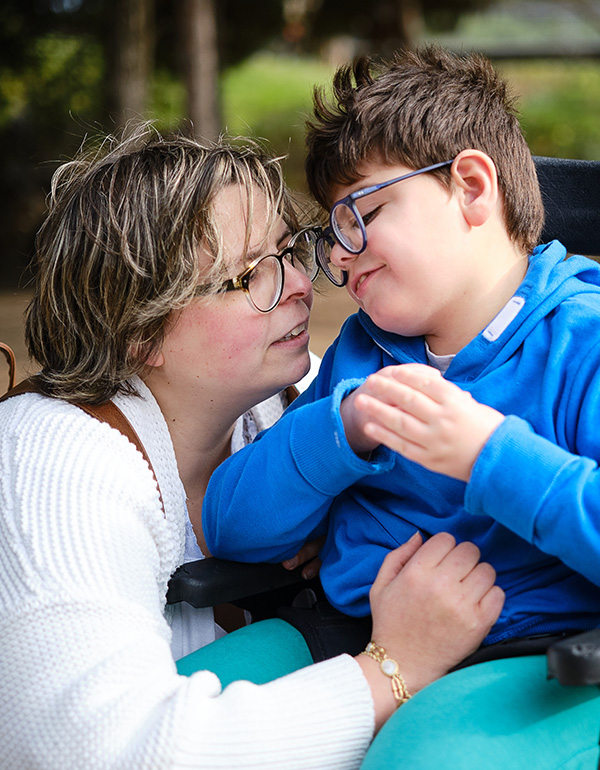
Caring for a child with special needs can be one of the most profound and rewarding journeys a parent will ever experience. But it can also relentlessly wear you down. By the time you realise you are in trouble, you and your family may have already started paying the price.
With appointments to organise, therapies to coordinate, educational decisions to make, behaviours to understand, financial pressures to manage and countless daily commitments that most people never see, you still have the responsibility of your career or pressing responsibilities to attend to.
And somewhere in the middle of caring for everyone else … the parent can quietly disappear.
You may become so focused on what your child needs that you stop noticing what you need. You keep going because you have to. You keep showing up because your child depends on you. Come on! Admit it. You tell yourself that you will rest when things settle down. I’ve been guilty of all of the above.
But sometimes, things don’t settle down, and this is why caring for your mental and emotional wellbeing isn’t selfish. It is absolutely essential.
The invisible weight of caregiving
Parents of children with disabilities often carry an enormous emotional load.
There may be ongoing uncertainty about your child’s future. There may be medical concerns, financial strain, difficult decisions, social judgement or the constant need to advocate for your child. You may also experience emotions that are difficult to talk about like exhaustion, frustration, grief, anger, fear, guilt or even resentment, and worse still, you may not have someone to vent to.
Having these feelings does not mean that you love your child any less. It simply means you are human. When extraordinary demands continue for months or years without sufficient support, stress can become chronic. What began as simply “coping” can gradually become emotional exhaustion, anxiety, low mood, irritability, sleep difficulties or burnout. Your own cognitive efficiency may take strain as you start making silly mistakes at work, become increasingly forgetful, or sink beneath the surface of overwhelm.
Because many parents become exceptionally good at carrying on, the warning signs can be easy to miss.
You are more than a caregiver
One of the most important things a parent can remember is:
You are a person before you are a caregiver. You have needs, dreams, relationships, interests, strengths and limits, believe it or not! You may be a professional, a partner, a friend, a daughter or son, a sibling, an entrepreneur or simply someone who enjoys a quiet cup of coffee and a conversation with a friend. These parts of you have not disappeared because your child needs additional care. They still matter.
In fact, consciously making efforts to consistently protect some space for the person behind the caregiver can help you remain emotionally available and resilient over the long term. Everyone wins if you are aware of your mental health, your breaking points and how to step away from the edge in a healthy way.
Your wellbeing affects the whole family
Looking after your mental health isn’t about becoming a “perfectly calm” parent. It’s about having enough emotional and physical capacity to navigate the really tough days. When a parent has opportunities to rest, process emotions, ask for help and regulate stress, it can positively influence the emotional climate of the entire household.
It becomes easier to communicate, make decisions, even easier to take a breath and respond rather than simply react. Most importantly, it becomes easier to sustain the extraordinary work of caregiving without completely losing yourself in it. The biggest beneficiaries aside from your own health and mental stability, is your child with special needs. Your family is stronger when you are well and your life is balanced.
You don’t have to earn the right to rest
Many parents struggle with guilt when they take time for themselves. You may think:
“My child needs me.”
“Other parents manage.”
“There are more important things to do.”
“I should be grateful.”
“I don’t have time.”
But rest isn’t something you have to earn by reaching breaking point. You don’t have to be completely exhausted before you are allowed to stop. You don’t have to justify needing support. And you don’t have to compare your capacity with somebody else’s. It’s essential that you honour yourself in your journey, so that you’re “not pouring from an empty cup”.
Caring for yourself is not abandoning your child
Perhaps the most important shift is that self-care isn’t taking something away from your child. It is helping you remain present for the journey. Sometimes caring for yourself might mean taking five quiet minutes. It might mean asking someone else to take over a task. Some delegation can help ease the load. A big one – learning to say no! And finally, and sadly, usually the last resort is reaching out to a counsellor or coach. There’s no shame in finding an objective, caring professional mind to help keep you steady when you admit:
“I’m struggling, and I need some support.”
That admission is not weakness. It’s responsible, and it shows true courage. You can do a self-interrogation of sorts, a kind of mental health scan by asking yourself simply, “What do I need today?”
The answer doesn’t have to be enormous. It can be as simple as needing ten minutes alone. You may need a little more sleep. You may just need someone to listen without offering advice. Coffee and a laugh or tears with a friend can work wonders. You need practical help or someone in your corner to remind you that you are doing an incredibly difficult job, and that you don’t have to do it perfectly. Just keep putting one foot in front of the other.
You matter too
Your child deserves care, understanding, love and support. But so do you.
At Sacred Child Alliance, we believe that supporting a child with special needs almost always translates into supporting the parent walking beside them, because behind every diagnosis is a family. And behind every caregiving role is a human being who also needs to be seen, heard, supported and cared for.
You are not a failure because you are tired, nor selfish for needing help and care. And although you may feel it, but you are not alone!
(Extract from Guardian of the Sacred Child by Julie Botha)